
The Path from Isolation to Connection: A Core Journey in Addiction Recovery

For many people struggling with sexual addiction, isolation isn’t a choice. It often starts with shame and secrecy. The behaviors that come with this addiction are usually hidden, and over time, that secrecy builds a wall between the individual and the people around them. Even when there’s a desire to stop, fear of judgment keeps the […]
Healing the Family: Why Couples Therapy Matters in Sexual Addiction Recovery

When someone is recovering from sexual addiction, the focus often centers on the individual. But what’s often overlooked is the deep emotional pain their partner and family may be carrying. Couples therapy plays a vital role in healing these wounds—especially when the foundation of trust has been severely damaged. The impact of sexual addiction extends far […]
Why Group Therapy Works When You’re Struggling with Sexual Compulsivity

When you’re dealing with sexual compulsivity, it’s easy to feel isolated. Shame and secrecy often make it harder to seek help. That’s why group therapy can be so effective—it creates a space where you’re not alone, where others understand your struggle in ways friends or family might not. You’re Not the Only One The first thing […]
What to Expect During a Sexual Behavior Risk Assessment

A Sexual Behavior Risk Assessment (SBRA) is a structured evaluation used to understand a person’s sexual behaviors, motivations, and potential risks to themselves or others. It’s not a test you can pass or fail. Instead, it’s a clinical process designed to provide insight and clarity. Whether you’re entering sexual addiction treatment, involved in a legal situation, […]
From Campfires to Art Therapy: How Non-Traditional Modalities Heal the Soul

When talk therapy feels like it’s not enough, non-traditional modalities can help you reach parts of yourself that words can’t always touch. These hands-on, interactive approaches often bring emotional breakthroughs that shift the course of healing—especially for those dealing with trauma, addiction, or emotional blockages. Here’s how different experiential therapies for sexual addiction can be essential tools […]
The Difference Between Shame and Accountability in Recovery

When working toward recovery from sexual addiction—especially in situations involving legal or moral consequences—it’s easy to fall into the trap of shame. But shame and accountability are not the same. One tears you down. The other builds the foundation for lasting change. If you confuse the two, your progress can stall or become self-destructive. Understanding Shame […]
EMDR, Neurofeedback, and the Tools That Rewire the Addicted Brain

Addiction isn’t just about behavior—it’s about how the brain processes pain, trauma, and emotion. Many people struggling with addiction have unresolved trauma or long-standing emotional dysregulation. Traditional therapy can be helpful, but in many cases, the brain itself needs to change before healing can begin. EMDR and neurofeedback are two evidence-based methods that do exactly that. How […]
Inside a 90-Day Stay: What Really Happens in Extended Care Programs
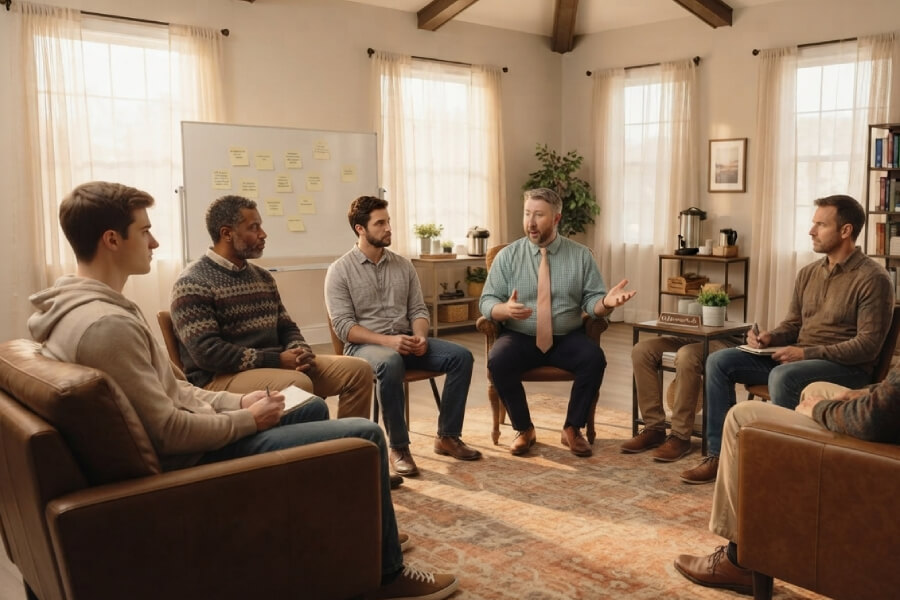
Extended care programs are designed for people who need more time and structure to address sexually compulsive behaviors and related trauma. A typical stay for sexual addiction lasts between 90 and 120 days. During this time, each phase of care is structured to help you stabilize, process your emotions, and build long-term recovery skills. Phase 1: Stabilization […]
Strategies for Preventing Recurrence Post-Treatment

Completing treatment for problematic sexual behaviors (PSB) marks a significant milestone, yet achieving long-term recovery strategies requires continuous effort and a structured approach. Preventing relapse after sexual addiction treatment is essential for restoring trust, and fostering overall well-being. An effective relapse prevention strategy incorporates self-awareness, support systems, and proactive coping mechanisms. This article presents evidence-based […]
Setting Boundaries with Confidence: Empowering Recovery from Problematic Sexual Behaviors

Recovering from Problematic Sexual Behaviors (PSB) requires a structured and disciplined approach that prioritizes self-awareness, emotional regulation, and accountability. Among the most critical components of this process is the establishment of healthy boundaries. Boundaries serve as protective mechanisms that reinforce self-respect, foster behavioral accountability, and promote overall well-being. This article examines the role of boundaries […]